Submitting your manuscript to an academic journal is a significant milestone in your research journey. While your manuscript contains the scientific meat of your work, the cover letter is your first—and often only—chance to make a compelling case to the journal editor. Studies show that poorly written cover letters can lead to immediate desk rejection, while well-crafted ones significantly increase your chances of progressing to peer review.
This comprehensive guide will walk you through everything you need to know about writing an effective journal submission cover letter in 2026, complete with templates, real-world examples, and insider tips from journal editors.
What Is a Journal Submission Cover Letter?
A journal submission cover letter (also called a covering letter or manuscript cover letter) is a formal document that accompanies your manuscript when you submit it to an academic journal. It serves as your introduction to the editor and makes the case for why your research deserves publication in their journal.
Think of it as a brief business pitch: you have approximately 300-400 words to convince a busy editor that your manuscript is worth their time, fits the journal’s scope, and will interest their readership.
Purpose of the Cover Letter
Your cover letter serves multiple critical functions:
Introduces your manuscript: It provides the title, article type, and a concise summary of your research in plain language that any editor can understand, regardless of their specific subspecialty.
Demonstrates journal fit: It shows you’ve done your homework by explaining specifically why your work aligns with the journal’s aims, scope, and readership.
Highlights significance: It emphasizes what’s new, important, and impactful about your research without the technical detail found in your abstract.
Provides required declarations: It includes essential statements about originality, conflicts of interest, funding sources, and author approvals that journals need for ethical publishing.
Shows professionalism: A well-written, error-free cover letter signals that you’re a careful researcher who follows instructions and pays attention to detail.
Why Cover Letters Matter More Than You Think
Many researchers underestimate the cover letter, treating it as a mere formality. This is a costly mistake. According to editors at top journals like Cell Press and Springer Nature, the cover letter is often the first document they read during initial screening—and it can make or break your submission.
The Business Reality of Journal Publishing
Journals receive hundreds or thousands of submissions annually. Editors must quickly identify which manuscripts are worth sending for peer review. A strong cover letter signals that:
- Your research aligns with the journal’s editorial priorities
- You understand the journal’s audience
- Your work will generate reader interest (and citations)
- You’re a professional researcher who can be trusted to follow through
When Cover Letters Are Most Critical
Cover letters carry extra weight in these situations:
Highly competitive journals: Top-tier journals may desk reject 50-80% of submissions before peer review. Your cover letter might be the deciding factor.
Interdisciplinary research: If your work crosses traditional boundaries, the cover letter helps editors understand its relevance and identify appropriate reviewers.
Borderline decisions: When editors are uncertain about a manuscript, a compelling cover letter can tip the scales toward peer review.
New researchers: Early-career scientists without established reputations must rely more heavily on their cover letters to make their case.
Essential Elements Every Cover Letter Must Include
Before diving into structure and style, let’s cover the non-negotiable elements that every journal submission cover letter should contain. Missing any of these could result in automatic desk rejection.
1. Editor’s Name and Journal Information
What to include:
- Full name of the handling editor (including credentials like PhD, MD)
- Their title (Editor-in-Chief, Managing Editor, Associate Editor)
- Journal name
- Journal address (if submitting by traditional mail or if required)
- Submission date
How to find the editor’s name: Check the journal’s website under “Editorial Board” or “About Us.” Some journals assign submissions to specific editors based on geographic region or specialty—choose accordingly. If multiple editors oversee different sections, select the one most relevant to your work.
If you can’t find the editor’s name: Use “Dear Editor-in-Chief” or “Dear Managing Editor” as a fallback. However, making the effort to find and use the actual name demonstrates attention to detail and respect.
Example:
Dr. Sarah Martinez, PhD
Editor-in-Chief
Journal of Molecular Biology
January 15, 2026
2. Manuscript Title and Article Type
State your full manuscript title exactly as it appears in your submission, and specify the article type (original research article, review, brief report, case study, etc.).
Example: “I am writing to submit our original research article entitled ‘CRISPR-Cas9 Mediated Targeting of Oncogenic KRAS Mutations in Pancreatic Cancer’ for consideration in the Journal of Molecular Biology.”
3. Brief Research Summary (2-3 Sentences)
This is NOT your abstract copy-pasted. Instead, provide a concise, jargon-free explanation of:
- The problem or knowledge gap you addressed
- What you did (in very general terms)
- Your key finding
- Why it matters
Example: “Pancreatic cancer remains one of the deadliest malignancies, with KRAS mutations present in over 90% of cases. We developed a novel CRISPR-Cas9 delivery system that specifically targets oncogenic KRAS mutations in patient-derived xenograft models. Our approach achieved a 60% reduction in tumor growth with minimal off-target effects, suggesting a viable therapeutic strategy for previously undruggable mutations.”
4. Journal Fit Statement
This is where many authors fail. Don’t just say your work is “appropriate” or “of interest.” Be specific about why this journal is the right home for your research.
Strong journal fit statements reference:
- Recent articles published in the journal on related topics
- The journal’s stated aims and scope
- The specific readership and their interests
- Special issues or calls for papers (if applicable)
- The journal’s reputation in your field
Weak example: “We believe this manuscript is suitable for publication in your journal.”
Strong example: “This manuscript aligns closely with the Journal of Molecular Biology’s focus on translational cancer research. Your recent publication by Chen et al. (2025) on therapeutic genome editing highlighted the need for improved delivery systems—a gap our work directly addresses. Your readership of molecular oncologists and translational researchers will find our CRISPR delivery platform immediately relevant to their work on targeting undruggable oncogenes.”
5. Originality and Exclusivity Statement
You must confirm that your work is original and not under consideration elsewhere. This is an ethical requirement for scientific publishing.
Standard wording: “We confirm that this manuscript describes original work and has not been published elsewhere, nor is it currently under consideration by another journal. All authors have approved the manuscript and agree with its submission to [Journal Name].”
6. Conflict of Interest Statement
Declare any potential conflicts of interest or state that none exist. This includes financial relationships, personal connections, or institutional affiliations that could bias your work.
If no conflicts: “The authors declare no conflicts of interest.”
If conflicts exist: “Dr. Smith has received research funding from PharmaCorp, which manufactures one of the drugs discussed in this study. All other authors declare no conflicts of interest.”
7. Additional Required Statements
Many journals require specific statements beyond the basics. Always check the journal’s Instructions for Authors. Common requirements include:
Ethical approval: “This study was approved by the [Institution] Institutional Review Board (Protocol #12345) and adhered to the Declaration of Helsinki.”
Informed consent: “All human participants provided written informed consent.”
Animal welfare: “All animal procedures followed ARRIVE guidelines and were approved by the [Institution] Animal Care Committee.”
Data availability: “All data supporting our findings are available in the manuscript and supplementary materials. Raw data are deposited in [Repository Name] under accession number [XXX].”
Funding acknowledgment: “This work was supported by [Funding Agency] grant [Number].”
Author contributions: Some journals want this in the cover letter, though most collect it separately.
8. Optional: Suggested Reviewers
Some journals ask you to suggest potential reviewers. This can help editors, but be strategic:
Good practices:
- Suggest 3-5 reviewers who are experts in your field
- Provide institutional email addresses (not personal Gmail accounts)
- Include their institutional affiliation
- Briefly explain their expertise and why they’re suitable
- Ensure they have no conflicts of interest with your work
Bad practices:
- Suggesting close collaborators or friends
- Listing your PhD advisor or former mentors
- Proposing people you’ve recently co-authored papers with
- Including more than 5 names (this looks desperate)
If suggesting excluded reviewers: Limit this to 2-3 people maximum, and only if you have legitimate reasons (active competitors working on identical projects, documented personal conflicts). Don’t exclude reviewers from “entire continents” or vaguely state “anyone working on X”—this raises red flags.
Cover Letter Structure: The Winning Formula
Now that you know what elements to include, let’s discuss how to organize them effectively. The best cover letters follow a clear three-paragraph structure that’s easy for busy editors to scan.
Opening Paragraph: The Introduction
What to include:
- Formal greeting with the editor’s name
- Statement of submission intent
- Manuscript title and article type
- Your name and affiliation as the corresponding author
Length: 2-3 sentences
Example: “Dear Dr. Martinez,
I am writing on behalf of my co-authors to submit our original research article entitled ‘CRISPR-Cas9 Mediated Targeting of Oncogenic KRAS Mutations in Pancreatic Cancer’ for consideration in the Journal of Molecular Biology. As the corresponding author, I am available to address any questions regarding this submission.”
Middle Paragraph(s): The Pitch
This is the heart of your cover letter, where you sell your research. Use 1-2 paragraphs to:
First middle paragraph:
- Briefly state the research problem or knowledge gap
- Explain what you did (general approach)
- Highlight your key finding(s)
- Emphasize the significance or impact
Second middle paragraph (if needed):
- Explain why this journal is the perfect fit
- Reference the journal’s scope, recent publications, or readership
- Connect your work to the journal’s priorities
Length: 4-6 sentences total
Example: “Pancreatic ductal adenocarcinoma remains largely incurable, with KRAS mutations present in over 90% of cases yet historically considered undruggable. We developed a lipid nanoparticle-based CRISPR-Cas9 system specifically engineered to target G12D KRAS mutations in vivo. In patient-derived xenograft models, our approach achieved sustained tumor growth inhibition (60% reduction) with negligible off-target editing, demonstrating clinical potential for precision oncology.
This work directly addresses the Journal of Molecular Biology’s focus on therapeutic genome editing and translational cancer research. Your recent article by Chen et al. (2025) on CRISPR delivery systems highlighted the need for improved targeting specificity—a challenge our nanoparticle platform overcomes. Your readership of molecular oncologists, cancer biologists, and translational researchers will find our findings immediately relevant to their work on precision therapeutics for oncogene-driven cancers.”
Closing Paragraph: The Wrap-Up
What to include:
- Required compliance statements (originality, conflicts of interest, author approval, ethics, etc.)
- Brief thank you
- Your contact information
- Offer to provide additional materials if needed
Length: 3-4 sentences
Example: “We confirm that this manuscript describes original work that has not been published elsewhere and is not under consideration by another journal. All authors have approved the manuscript and agree with its submission to the Journal of Molecular Biology. The authors declare no conflicts of interest, and this work was approved by the MIT Institutional Review Board (Protocol #2025-001).
Thank you for considering our manuscript. Please do not hesitate to contact me if you require any additional information.
Sincerely, Dr. James Chen Department of Molecular Oncology Massachusetts Institute of Technology Email: jchen@mit.edu Phone: +1-617-555-0123″
Copy-Paste Ready Templates
Template 1: Basic Cover Letter (For Standard Submissions)
[Editor's Name and Credentials]
[Editor's Title]
[Journal Name]
[Date]

Dear Dr. [Editor's Last Name],

I am writing to submit our [article type] entitled "[Full Manuscript Title]" for consideration in [Journal Name]. [Optional: Brief sentence about co-authors or your role as corresponding author.]

[2-3 sentences explaining: the research problem, what you did, key finding, and why it matters. Use plain language that any scientist can understand.]

This work aligns closely with [Journal Name]'s [reference specific aspect of journal's scope, recent articles, or editorial priorities]. Your readership of [describe audience] will find our findings significant because [explain specific benefit or application].

We confirm that this manuscript describes original work that has not been published elsewhere and is not currently under consideration by another journal. All authors have approved the manuscript and agree with its submission to [Journal Name]. [Add other required statements: conflicts of interest, ethics approval, funding, data availability, etc.]

Thank you for considering our manuscript. I am available to provide any additional information and can be reached at [email address].

Sincerely,
[Your Full Name]
[Your Title]
[Your Department]
[Your Institution]
[Email]
[Phone]
Template 2: Advanced Cover Letter (For Competitive Journals)
Dr. [First Name] [Last Name], [Credentials]
[Editor Title]
[Journal Name]
[Institution/Publisher Address]
[Month Day, Year]

Dear Dr. [Last Name],

On behalf of my co-authors, I am pleased to submit our [article type] entitled "[Full Manuscript Title]" for consideration as a [specific article category, e.g., "research article" or "featured paper"] in [Journal Name].

[Opening sentence establishing the field context and current knowledge gap. Example: "Despite decades of research into pancreatic cancer, KRAS mutations remain undruggable targets in clinical practice."]

[2-3 sentences describing your research approach, key innovations, and main findings with specific results. Example: "We developed a novel lipid nanoparticle delivery system for CRISPR-Cas9 that achieves 85% targeting efficiency of G12D KRAS mutations in vivo. In patient-derived xenograft models (n=24), our approach reduced tumor burden by 60% while maintaining less than 0.1% off-target editing—a significant advance over existing methods."]

[1-2 sentences on significance and broader impact. Example: "These findings establish a viable therapeutic pathway for targeting previously undruggable oncogenic mutations and may have immediate translation potential for clinical trials."]

[Journal fit paragraph explaining why this specific journal is ideal. Reference recent articles, journal scope, or editorial priorities. Example: "This manuscript aligns directly with [Journal Name]'s emphasis on translational genomics and precision medicine. Your recent publication by Chen et al. (2025) on CRISPR therapeutic development highlighted the critical need for improved delivery systems with enhanced specificity. Additionally, our work complements the ongoing special series on 'Genome Editing in Oncology' by providing practical solutions to delivery challenges that your readership of cancer biologists and translational researchers face in their own work."]

[Optional paragraph on potential reviewers if requested by journal:]
We respectfully suggest the following individuals as potential reviewers due to their expertise in CRISPR therapeutics and cancer biology: [List 3-5 names with affiliations and email addresses, brief justification for each]. We request that [Name] and [Name] be excluded from the review process due to [brief, professional reason].

[Compliance paragraph with all required statements:]
We confirm that this work is original and has not been previously published or submitted elsewhere for consideration. All authors have reviewed and approved the final manuscript and agree with its submission to [Journal Name]. This study was conducted in accordance with ethical guidelines and received approval from the [Institution] Institutional Review Board/Ethics Committee (Protocol #XXXXX). [Add specific statements about: conflicts of interest, funding sources, data availability, clinical trial registration, etc. as required by the journal.]

We believe this manuscript will be of strong interest to your readership and will contribute significantly to the field of [your field]. Thank you for considering our work. I am happy to provide any additional information and can be reached at [email] or [phone].

Sincerely,

[Your Signature if submitting as PDF]
[Your Full Name], [Your Credentials]
[Your Position]
[Your Department]
[Your Institution]
[Full Address]
Email: [your email]
Phone: [your phone]
ORCID: [your ORCID iD, if applicable]
Real Examples by Discipline
Seeing examples from different fields helps you understand how to adapt the template to your specific discipline. Here are cover letters tailored to different research areas.
Example 1: Biomedical Research
Dr. Robert Weinberg, MD, PhD
Editor-in-Chief
Cell
January 15, 2026

Dear Dr. Weinberg,

I am writing to submit our research article entitled "Single-Cell Transcriptomic Atlas Reveals Novel Immune Evasion Mechanisms in Metastatic Melanoma" for consideration in Cell.

Immune checkpoint blockade has revolutionized melanoma treatment, yet 60% of patients show primary resistance. Using single-cell RNA sequencing of tumor samples from 45 patients pre- and post-immunotherapy, we identified a previously unknown subset of tumor-associated macrophages that actively suppress CD8+ T cell function through novel IL-10-independent mechanisms. Depleting these cells in mouse models restored anti-tumor immunity and overcame resistance to PD-1 blockade in 70% of cases. Our findings reveal a targetable mechanism that could expand the benefit of immunotherapy to non-responding patients.

This work aligns with Cell's focus on transformative discoveries in cancer immunology. Your recent publication by Sharma et al. (2025) on tumor microenvironment heterogeneity emphasized the need to understand resistance mechanisms at single-cell resolution—exactly what our study provides. Your broad readership of cancer biologists, immunologists, and clinical researchers will find immediate value in our identification of a novel therapeutic target for immunotherapy-resistant melanoma.

We confirm that this manuscript has not been published elsewhere and is not under consideration by another journal. All authors have approved the manuscript and agree with its submission to Cell. This study received approval from the Dana-Farber Cancer Institute Institutional Review Board (Protocol #2024-156) and complied with all ethical guidelines for human subject research. The authors declare no conflicts of interest. This work was supported by NIH grants CA198765 and CA201234.

Thank you for considering our manuscript. All supporting data are included in the submission, and I am available to provide any additional information.

Sincerely,

Dr. Jennifer Wu, PhD
Associate Professor
Department of Cancer Immunology
Dana-Farber Cancer Institute
Harvard Medical School
Email: jennifer_wu@dfci.harvard.edu
Phone: +1-617-555-0198
ORCID: 0000-0002-1234-5678
Example 2: Social Science
Dr. Michael Martinez, PhD
Editor-in-Chief
Journal of Educational Psychology
January 15, 2026

Dear Dr. Martinez,

I am pleased to submit our empirical research article entitled "Growth Mindset Interventions in Lower-Income Schools: A Five-Year Longitudinal Study of Academic Achievement and Persistence" for consideration in the Journal of Educational Psychology.

Despite widespread adoption of growth mindset interventions in schools, their long-term effectiveness in diverse educational contexts remains unclear. We conducted a five-year randomized controlled trial involving 2,400 students across 24 lower-income middle schools, examining the sustained impact of a culturally adapted growth mindset curriculum. Our results show that while initial gains in math achievement were modest (d=0.18), students in the intervention group demonstrated significantly higher persistence through high school (15% reduction in dropout rates) and were 22% more likely to enroll in college. Critically, we identified that intervention effectiveness was moderated by teacher implementation fidelity and school climate factors.

This research directly addresses the Journal of Educational Psychology's mission to publish rigorous studies with practical educational implications. Your recent special section on "Scaling Evidence-Based Interventions" highlighted the field's need for long-term effectiveness data beyond controlled laboratory settings. Our findings provide exactly this real-world evidence while also identifying the contextual factors that practitioners need to consider when implementing growth mindset programs. Your readership of educational psychologists, school administrators, and policy researchers will find our mixed-methods analysis of implementation barriers particularly valuable.

We confirm that this manuscript has not been published or submitted elsewhere. All authors have reviewed and approved the submission to the Journal of Educational Psychology. This study received approval from the Stanford University Institutional Review Board (Protocol #54321) and followed APA ethical guidelines for research with minors. Parental consent and student assent were obtained for all participants. The authors declare no conflicts of interest. This research was funded by the Spencer Foundation (Grant #202300145) and the Institute of Education Sciences (Grant #R305A190234). All de-identified data and analysis code are available at [https://osf.io/xyz123].

Thank you for considering our work. I welcome any questions and can be reached at the contact information below.

Sincerely,

Dr. Lisa Park, PhD
Assistant Professor
Graduate School of Education
Stanford University
Email: lpark@stanford.edu
Phone: +1-650-555-0234
ORCID: 0000-0003-2345-6789
Example 3: Engineering
Dr. Karen Smith, PhD
Editor-in-Chief
Nature Materials
January 15, 2026

Dear Dr. Smith,

I am writing to submit our Article entitled "Self-Healing Concrete with Bacteria-Encapsulated Hydrogel Capsules: Mechanisms and Large-Scale Performance" for consideration in Nature Materials.

Infrastructure deterioration costs global economies over $3 trillion annually, with concrete cracking being the primary failure mode. We developed a novel self-healing concrete system using engineered Bacillus spores encapsulated in alginate-based hydrogel microspheres that activate upon crack formation. In accelerated laboratory tests, our material achieved complete healing of 0.5mm cracks within 14 days and recovered 95% of original compressive strength. Importantly, large-scale field trials on highway infrastructure demonstrated sustained healing performance over two years with 60% reduction in maintenance needs compared to conventional concrete.

This work aligns with Nature Materials' focus on materials innovations with significant real-world impact. Your recent Review by Zhang et al. (2025) on bio-inspired functional materials identified self-healing infrastructure as a critical application area requiring scalable solutions. Our system addresses this need by achieving the first successful transition from laboratory to field deployment of bacteria-based self-healing concrete. Your multidisciplinary readership—spanning materials scientists, civil engineers, and sustainability researchers—will appreciate both our mechanistic insights into crack-healing dynamics and our demonstration of practical, cost-effective implementation.

We confirm this manuscript describes original research that has not been published or submitted elsewhere. All authors have approved the manuscript and agree with its submission to Nature Materials. The authors declare no conflicts of interest, though we note that a provisional patent application (US Provisional #63/789,456) has been filed for the hydrogel encapsulation technology. This work was supported by the National Science Foundation (Grant #CMMI-2154321) and the Department of Transportation (Grant #DTFH61-22-C-00012). All experimental data supporting our findings are included in the main text and supplementary materials.

Thank you for considering our manuscript. I am available to provide additional information or materials and can be reached at the contact information below.

Sincerely,

Dr. Robert Chen, PhD
Professor
Department of Civil and Environmental Engineering
Massachusetts Institute of Technology
Email: rchen@mit.edu
Phone: +1-617-555-0167
ORCID: 0000-0001-3456-7890
Example 4: Humanities
Dr. Patricia Williams, PhD
Editor
Modern Language Quarterly
January 15, 2026

Dear Dr. Williams,

I am pleased to submit my article entitled "Linguistic Hybridity and Colonial Resistance in 19th-Century Caribbean Poetry" for consideration in Modern Language Quarterly.

Scholarship on Caribbean postcolonial literature has largely focused on 20th-century works, leaving earlier linguistic experimentation understudied. Through close analysis of archival materials from the National Library of Jamaica, I examine how 19th-century Caribbean poets strategically deployed linguistic code-switching and creole forms as acts of cultural resistance against colonial linguistic hegemony. I demonstrate that these poets—previously dismissed as merely imitating European forms—were in fact sophisticated language innovators who prefigured modernist literary techniques by decades. This recuperative reading challenges conventional periodization of Caribbean literature and expands our understanding of how colonized subjects negotiated linguistic identity.

This article aligns with Modern Language Quarterly's commitment to interdisciplinary work that bridges literary studies, postcolonial theory, and linguistic analysis. Your recent special issue on "Language and Empire in the Long 19th Century" (2024) emphasized the need for studies examining linguistic resistance in colonial contexts—precisely what my research provides. Your readers interested in postcolonial studies, Caribbean literature, and the politics of language will find my archival discoveries and theoretical framework valuable for rethinking the genealogy of linguistic hybridity in colonial and postcolonial writing.

I confirm that this article has not been published or submitted elsewhere and represents original scholarship. I am the sole author and approve its submission to Modern Language Quarterly. I declare no conflicts of interest. Portions of this research were presented at the Modern Language Association Annual Convention (2025), but the complete argument appears here for the first time. I acknowledge support from the National Endowment for the Humanities Summer Fellowship and the University of California President's Faculty Research Fellowship in the Humanities.

Thank you for considering my work. I would be happy to provide additional information and can be reached at the contact information below.

Sincerely,

Dr. Maria Rodriguez, PhD
Associate Professor
Department of English
University of California, Berkeley
Email: mrodriguez@berkeley.edu
Phone: +1-510-555-0145
ORCID: 0000-0004-4567-8901
Ideal Cover Letter Length
One of the most common questions authors ask is: “How long should my cover letter be?” The answer is nuanced but follows clear guidelines.
The Sweet Spot: 250-400 Words
For most journals and most manuscripts, your cover letter should be between 250 and 400 words (excluding the header with addresses and contact information). This length allows you to:
- Properly introduce your manuscript
- Explain your key findings and their significance
- Demonstrate journal fit convincingly
- Include all required compliance statements
- Maintain the editor’s attention and respect their time
Research on editor preferences consistently shows that letters in this range perform best. They’re substantial enough to make a compelling case but concise enough to be read carefully during initial screening.
Absolute Maximum: One Page (500 Words)
Never exceed one page of single-spaced text. Editors are incredibly busy, often screening dozens of submissions per day. A cover letter longer than one page signals:
- Inability to communicate concisely—a red flag for scientific writing
- Possible padding or lack of focus
- Disrespect for the editor’s time
If you’re struggling to fit everything into one page, you’re likely including too much detail that belongs in your manuscript, not your cover letter.
When Shorter Is Better
In some cases, brevity is advantageous:
Highly specialized journals: If you’re submitting to a very narrow, specialized journal where your work obviously fits, you can be more concise (200-300 words).
Resubmissions: If you’re resubmitting after revisions to the same journal, your revised cover letter can be shorter since the editor is already familiar with your work.
When journal instructions specify: Always follow journal-specific guidelines. If they request a 200-word maximum, don’t exceed it.
Red Flags for Length
Too short (under 150 words): This suggests you haven’t put adequate effort into making your case. At minimum, you need space for a proper introduction, a brief research description, a journal fit statement, and compliance declarations.
Too long (over 500 words): This suggests you don’t understand the purpose of a cover letter or can’t identify and emphasize your most important points.
Formatting to Maximize Space
To keep within one page while including all necessary information:
- Use single spacing within paragraphs
- Use a readable 11-12 point font (Times New Roman, Arial, Calibri)
- Use standard margins (1 inch on all sides)
- Minimize header/address space by using a condensed format
- Consider putting the date on the same line as the editor’s name (right-aligned) to save a line
Common Mistakes That Lead to Rejection
Even experienced researchers make predictable errors in their cover letters. Avoiding these mistakes will immediately put you ahead of a significant portion of other submissions.
1. Generic, Template-Style Letters
The mistake: Using the exact same cover letter for multiple journals, just swapping out the journal name. Editors can spot these instantly.
What it signals:
- You’re mass-submitting without careful consideration
- You don’t actually understand or care about the journal
- You’re a “journal hopper” who might cause problems
How to fix it: Write a fresh cover letter for each submission that specifically references:
- Recent articles published in that journal (with authors and dates)
- The journal’s unique scope or focus areas
- Why that specific readership will care about your work
- The journal’s editorial priorities or recent special issues
2. Copy-Pasting Your Abstract
The mistake: Directly copying your manuscript abstract into the cover letter, often with identical technical language and formatting.
What it signals:
- Laziness or disrespect for the editor’s time
- Inability to communicate to broader audiences
- You don’t understand the difference between an abstract and a cover letter
How to fix it: Your cover letter should complement, not duplicate, your abstract. Write a fresh 2-3 sentence research summary that:
- Uses more accessible language
- Emphasizes significance and novelty over methods
- Provides context that the abstract might not include
- Highlights why the editor should care, not just what you did
3. Excessive Jargon and Acronyms
The mistake: Using highly specialized terminology that only experts in your subspecialty would understand.
What it signals:
- Poor communication skills
- Inability to explain significance to broader audiences
- Potential difficulty communicating with reviewers
How to fix it: Remember that the editor screening your letter may not be a specialist in your exact niche. Write in plain language that any scientist in your general field could understand. Define acronyms on first use or avoid them altogether.
Bad example: “We performed scRNA-seq on PDAC samples using 10x Chromium to identify TAM subpopulations expressing novel SIRP-α variants that mediate CD47-independent phagocytosis evasion through LILRB interactions.”
Better example: “Using single-cell analysis of pancreatic tumors, we discovered a previously unknown immune cell population that helps cancer cells evade destruction, offering a new therapeutic target.”
4. Overselling with Hyperbolic Language
The mistake: Using exaggerated claims like “groundbreaking,” “paradigm-shifting,” “revolutionary,” “first ever,” or “unprecedented” to describe your work.
What it signals:
- Lack of objectivity about your own work
- Potential over-promising that the manuscript won’t be delivered
- Amateur status (established researchers rarely use such language)
How to fix it: Let your results speak for themselves. Use precise, measured language that’s confident without being boastful:
Instead of: “Our groundbreaking study fundamentally revolutionizes the field…” Use: “Our findings challenge the current model by demonstrating…”
Instead of: “This unprecedented discovery will change everything…” Use: “These results provide new insights into [mechanism] and suggest that…”
5. Addressing the Wrong Editor or Journal
The mistake: Sending a cover letter addressed to “Journal A” when submitting to “Journal B,” or using an outdated editor name.
What it signals:
- Extreme carelessness
- Mass submission without proper attention
- Complete lack of professionalism
How to fix it: Before submitting:
- Double-check that the journal name is correct throughout
- Verify the current editor’s name on the journal website
- Search for recent news about editorial changes
- Have a colleague review your letter for accuracy
This seems obvious, but it happens more often than you’d think and almost always results in immediate rejection.
6. Missing Required Elements
The mistake: Failing to include mandatory statements about originality, conflicts of interest, ethical approval, or other journal-specific requirements.
What it signals:
- Failure to read instructions
- Potential ethical issues
- Unreliability as an author
How to fix it: Before writing your cover letter:
- Read the journal’s “Instructions for Authors” completely
- Make a checklist of all required statements
- Check off each item as you include it in your letter
- Have a co-author verify all requirements are met
Missing even one required element can trigger automatic rejection without review.
7. Poor Formatting and Typos
The mistake: Submitting a cover letter with spelling errors, grammatical mistakes, inconsistent formatting, or an unprofessional appearance.
What it signals:
- Lack of attention to detail
- Questionable quality of the manuscript itself
- Limited English proficiency without proper editing support
How to fix it:
- Use spell-check and grammar-check tools
- Read your letter aloud to catch awkward phrasing
- Have multiple colleagues proofread it
- If English isn’t your first language, consider professional editing services
- Verify the editor’s name spelling multiple times
Remember: if you can’t write an error-free one-page letter, editors will worry about the quality of your 30-page manuscript.
8. Including Irrelevant Personal Information
The mistake: Discussing your career needs (“I need this publication for tenure”), previous rejections from other journals, difficulties during the research, or personal hardships you faced.
What it signals:
- Unprofessional boundary confusion
- Potential emotional manipulation
- Misunderstanding of the publication process
How to fix it: Keep the focus entirely on the science. Editors make decisions based on scientific merit, journal fit, and potential reader interest—never on an author’s personal circumstances. Your career needs are not the editor’s concern or responsibility.
9. Making Demands or Threats
The mistake: Insisting on fast-track review, demanding specific reviewers, threatening to withdraw if conditions aren’t met, or suggesting your work deserves special treatment.
What it signals:
- Entitled attitude
- Potential to be a difficult author
- Lack of understanding of peer review norms
How to fix it: Maintain a professional, humble tone throughout. You’re requesting consideration, not demanding publication. If you have legitimate time constraints (e.g., competing publications on the same topic), mention them factually without pressure:
Bad: “This work must be fast-tracked as it’s groundbreaking and competitors are close behind.” Better: “We note that two other groups presented preliminary work on similar approaches at recent conferences, which may interest the editor in terms of timeliness.”
10. Inappropriate Length or Detail in Research Description
The mistake: Providing excessive methodological detail, complete results sections, or trying to summarize every aspect of your multi-year project in the cover letter.
What it signals:
- Inability to identify what’s most important
- Poor judgment about what information goes where
- Potential that the manuscript itself lacks focus
How to fix it: Your cover letter should highlight only:
- The central research question
- Your overall approach (one sentence, very general)
- The key finding (with one specific quantitative result, if possible)
- Why it matters
Save methodological detail, complete results, limitations, and comprehensive context for the manuscript itself.
Tips for Writing Compelling Cover Letters
Beyond avoiding mistakes, here are proactive strategies for crafting cover letters that catch editors’ attention for the right reasons.
1. Research the Journal Thoroughly
Before writing a single word:
Visit the journal’s website and review:
- About/Aims & Scope page
- Recent table of contents (past 6-12 months)
- Editorial board members and their research areas
- Recent editorials or perspective pieces
- Special issues or calls for papers
- Social media accounts to understand current priorities
Use this research to:
- Identify 1-2 recent articles related to your work that you can reference
- Understand the journal’s current editorial direction
- Determine which editor or section is most appropriate
- Craft a genuinely specific journal fit statement
Pro tip: If the journal recently published an editorial about needing more research on “X” and your paper addresses exactly that—mention it explicitly. Editors remember their own stated priorities.
2. Lead with Your Strongest Point
Open your research description with the most compelling aspect of your work—don’t bury the lead. Ask yourself: “If the editor reads only one sentence about my research, what should it be?”
Less effective opening: “Cancer immunotherapy has emerged as a promising treatment approach in recent years…”
More effective opening: “We identified a previously unknown resistance mechanism that explains why 60% of melanoma patients don’t respond to checkpoint inhibitors—and demonstrate that targeting it restores treatment sensitivity.”
The first sentence should make the editor think: “I need to keep reading.”
3. Be Specific About Significance
Vague claims about “advancing the field” or “contributing to knowledge” don’t persuade anyone. Instead, articulate concrete impacts:
Vague: “This work advances our understanding of climate change impacts.”
Specific: “Our findings indicate that current IPCC models underestimate permafrost carbon release by 30%, with implications for 2°C pathway projections that inform international climate policy.”
Vague: “This research will interest educators and policy makers.”
Specific: “These results provide the first long-term evidence that growth mindset interventions reduce dropout rates in lower-income schools—offering a scalable, cost-effective strategy for districts struggling to meet equity goals.”
4. Make the Journal Connection Explicit and Authentic
Don’t just say your work “fits” the journal. Demonstrate deep familiarity by:
Referencing specific recent articles: “Your recent publication by Smith et al. (2025) on coral bleaching mechanisms identified thermal stress response pathways as a critical knowledge gap—our work characterizes these pathways at single-cell resolution.”
Connecting to stated journal priorities: “This manuscript aligns with Nature Sustainability’s mission to publish research with immediate policy relevance. Our economic modeling provides concrete carbon pricing recommendations that policymakers can implement.”
Identifying your specific audience within the journal’s readership: “While your journal serves the broad atmospheric science community, we anticipate particular interest from the stratospheric chemistry and satellite remote sensing subcommunities who are actively developing next-generation observation systems.”
5. Use Confident but Humble Language
Strike a balance between confidence in your work and appropriate scientific humility.
Too timid: “We hope that our modest contribution might be of some interest…”
Too arrogant: “Our revolutionary breakthrough will fundamentally transform the field…”
Just right: “Our findings challenge the current paradigm by demonstrating that [X], and we believe they will prompt reconsideration of [established model].”
6. Quantify When Possible
Specific numbers are more persuasive than qualitative descriptions:
Less persuasive: “We achieved substantial efficiency improvements…” More persuasive: “We achieved a 40% increase in solar cell efficiency compared to current commercial standards…”
Less persuasive: “Our intervention showed positive effects…” More persuasive: “Students in the intervention group demonstrated a 0.3 standard deviation improvement in standardized math scores…”
7. Consider the Editor’s Perspective
Remember that editors are trying to:
- Maintain journal quality and reputation
- Attract citations and reader interest
- Serve their specific scholarly community
- Manage limited pages/slots for publication
- Identify reviewers who can properly evaluate your work
Frame your letter in terms of these priorities:
“We believe this manuscript will generate significant interest among your readership because it provides the first experimental validation of a widely used theoretical model, potentially influencing how researchers across [field] design future studies.”
8. End Strong
Your closing paragraph shouldn’t just trail off with perfunctory thank-yous. Reaffirm your key message:
Weak closing: “Thank you for your time. Please let me know if you need anything else.”
Strong closing: “We believe this manuscript will resonate strongly with [Journal]’s readership given its direct relevance to ongoing debates about [topic] and its immediate applicability to [application]. Thank you for considering our work, and please don’t hesitate to contact me with any questions.”
9. Get Feedback Before Submitting
Have colleagues review your cover letter and ask them:
- Is my key contribution immediately clear?
- Does the journal fit explanation sound genuine and specific?
- Are there any unclear or jargon-heavy passages?
- Would this make them want to read the manuscript?
Fresh eyes catch errors you’ve become blind to and provide perspective on whether your pitch is as compelling as you think.
10. Save Templates but Customize Heavily
It’s fine to start with a template or previous cover letter, but customize at least 60-70% of the content for each new submission. The parts that must be fresh for each journal:
- All journal-specific references and fit explanations
- Editor name and greeting
- Research significance framing (tailor to that journal’s audience)
- Any references to journal priorities or recent publications
Special Situations and How to Handle Them
Not all submissions are straightforward. Here’s how to navigate common special circumstances.
Resubmission After Rejection from Another Journal
What NOT to do: Never mention that your manuscript was previously rejected elsewhere. This includes:
- “After careful consideration of reviewer feedback from Journal X…”
- “We have substantially revised this manuscript following rejection by…”
- “This improved version addresses concerns raised during our previous submission to…”
Why this matters: Mentioning rejection elsewhere creates unnecessary bias. Each journal should evaluate your work with fresh eyes.
What to DO:
- Write a completely new cover letter tailored to the new journal
- Don’t reference previous submission history at all
- If you made major improvements based on previous reviews, you can mention “We recently revised this manuscript to strengthen [X]” without referencing where or why
- Focus entirely on why THIS journal is the right fit
- Be patient—finding the right journal fit sometimes takes multiple attempts (learn more about what to do after manuscript rejection)
Invited Submissions
If an editor specifically invited you to submit:
Mention this prominently in your opening paragraph:
“I am pleased to submit our review article entitled ‘[Title]’ at your invitation following our correspondence on [date] regarding [topic]. As discussed, this review synthesizes recent advances in [field] and addresses the gap you identified in your editorial on [subject].”
Important notes:
- Still include all standard cover letter elements (fit statement, compliance declarations, etc.)
- Don’t assume invitation guarantees acceptance—make your case compellingly
- Reference the specific conversation or invitation email
- If the invitation came from a specific editor, address your letter to that person
Special Issue or Thematic Collection Submissions
When submitting to a special issue:
In your opening paragraph, state: “I am writing to submit our research article entitled ‘[Title]’ for consideration in your special issue on ‘[Special Issue Theme]’ guest edited by [Guest Editor Names].”
In your fit paragraph, explain:
- How does your work address the special issue theme
- Which specific questions from the call for papers do you address
- How does your work complement other anticipated contributions
Example: “This manuscript directly addresses your call for papers on ‘Sustainable Urban Infrastructure’ by examining the economic viability of large-scale green roof implementation. Our cost-benefit analysis provides the quantitative evidence that policymakers need—a specific gap identified in your special issue prospectus. We anticipate our findings will complement the technical and ecological perspectives from other contributors by addressing the economic feasibility question.”
Don’t:
- Assume special issues have lower standards (they often have higher standards)
- Skip the journal fit explanation (it’s still important)
- Submit work that only tangentially relates to the theme
Manuscript Transfer from Another Journal (Publisher-Mediated)
Many publishers (like Springer, Elsevier, Wiley) offer manuscript transfer between journals in their portfolio when papers are rejected.
If taking advantage of a transfer option:
Mention it in your opening: “I am submitting our manuscript entitled ‘[Title]’ for consideration in [Journal Name] through the transfer option offered by [Publisher] following our submission to [Previous Journal].”
Explain what changed: “Based on editorial feedback from [Previous Journal], we have [revised the manuscript to strengthen X / reframed the work to emphasize Y / shortened the manuscript by focusing on Z].”
Highlight why the new journal is appropriate: “While [Previous Journal] focuses on [X], we recognize that [New Journal]’s emphasis on [Y] is a better fit for our work, particularly given its applied focus and industry readership.”
Note previous reviews if they were positive: “The reviewers at [Previous Journal] noted the work’s ‘[positive quote]’ but recommended transfer given [reason]. We believe [New Journal]’s readership will find these strengths particularly valuable.”
Important:
- Be honest about the transfer—editors can usually see this in the system anyway
- Don’t be defensive about the rejection from the first journal
- Make a genuine case for fit with the new journal (don’t imply you’re settling)
Preprints Already Posted
If you’ve posted your work as a preprint on bioRxiv, arXiv, medRxiv, SSRN, or similar platforms:
In your cover letter, include: “We note that a preprint version of this work has been posted on [Platform Name] ([DOI or URL]). This submission complies with your journal’s preprint policy as stated in your author guidelines.”
Don’t:
- Hide the preprint’s existence—editors will find it anyway
- Worry that it disqualifies you—most journals now accept preprints
- Mention social media attention or preprint downloads (unless extraordinary)
Do check:
- Your target journal’s preprint policy before submitting
- That the preprint is clearly labeled as “not peer-reviewed.”
- Whether the journal requires preprint updates upon publication
Submissions During Conferences or Time-Sensitive Situations
If timing matters legitimately:
You can briefly mention time sensitivity, but frame it professionally:
Acceptable: “We note that three research groups presented preliminary findings on similar approaches at the recent [Conference Name], highlighting active interest in this area. We believe timely publication would benefit the community by providing comprehensive experimental validation.”
Not acceptable: “We need a fast-track decision because we’re presenting at a conference in two months and want to cite the accepted version.”
General rule: Only mention timing if it relates to scientific priority or community benefit, never personal career needs.
Multi-Institution Collaborations
When your author list includes many institutions or international collaborators:
You don’t need to list every author’s affiliation in the cover letter (that’s in the manuscript). But you might note:
“This work represents a collaboration between [Number] institutions across [Number] countries, facilitated by the [Network/Consortium Name], and reflects the multidisciplinary expertise required to address [complex problem].”
This can actually strengthen your pitch by demonstrating the scale and significance of the effort.
Controversial or Politically Sensitive Topics
If your research addresses contentious issues:
Do:
- Maintain scientific objectivity in your language
- Emphasize methodological rigor
- Acknowledge complexity rather than oversimplifying
- Frame findings as empirical observations, not political statements
Don’t:
- Use inflammatory language or obvious political framing
- Claim your work “settles” contentious debates
- Dismiss alternative perspectives without evidence
- Assume the editor shares your political views
Example approach: “Given ongoing policy debates about [topic], we believe our empirical findings—based on [rigorous method] and [large dataset]—will contribute evidence to inform these discussions.”
What NOT to Include in Your Cover Letter
Knowing what to exclude is as important as knowing what to include.
❌ Don’t Include: Full Abstract or Detailed Methods
Why: The editor will read your full abstract in the manuscript itself. Repeating it in the cover letter wastes space and suggests you can’t distinguish between document purposes.
What to do instead: Provide a concise 2-3 sentence summary that complements (not duplicates) your abstract, using more accessible language and emphasizing significance over methods.
❌ Don’t Include: Complete Results Section
Why: Detailed results belong in your manuscript. The cover letter should highlight only your key finding—the single most important result that demonstrates your contribution.
What to do instead: Choose your one most compelling result (ideally with a specific number or statistic) and present it in the context of why it matters.
❌ Don’t Include: Career Justifications or Personal Circumstances
Why: Editors evaluate manuscripts based on scientific merit and journal fit—not on whether publication would help your career, tenure case, or personal situation.
Never write:
- “I need this publication for my tenure review.”
- “This is my first paper as an independent investigator.”
- “I’ve been working on this for five years.”
- “Previous rejections have been discouraging.”
What to do instead: Let your science speak for itself. Your career circumstances are not relevant to editorial decisions.
❌ Don’t Include: Demands or Entitlement Language
Why: You’re requesting consideration, not demanding publication. Entitled language damages your relationship with the editor before it even begins.
Never write:
- “This groundbreaking work deserves fast-track review.”
- “You should accept this manuscript because…”
- “We will withdraw if you don’t meet our timeline.”
- “This is better than anything currently published in your journal.”
What to do instead: Maintain a professional, respectful tone throughout. Confidence is good; arrogance is destructive.
❌ Don’t Include: Negative Comments About Other Research
Why: Criticizing others’ work in your cover letter appears petty and unprofessional. It also risks offending the editor if those researchers are friends, collaborators, or even potential reviewers.
Never write:
- “Unlike the flawed study by Smith et al….”
- “Previous research has completely misunderstood…”
- “Jones’s work on this topic is clearly wrong because…”
What to do instead: Frame your contribution positively. You can note that your work “challenges,” “refines,” or “extends” previous findings without being dismissive.
❌ Don’t Include: Excessive Hedging or Apologies
Why: Too much hedging undermines confidence in your work and suggests you don’t believe in your own findings.
Avoid phrases like:
- “We hope our small contribution might possibly…”
- “This modest study perhaps suggests…”
- “We apologize for the limitations but…”
- “While this work has many flaws…”
What to do instead: Be confident but not arrogant. State your findings clearly and acknowledge appropriate scientific uncertainty without over-hedging.
❌ Don’t Include: Complete Author Biographies
Why: Brief credentials for the corresponding author are sufficient (name, title, institution). Detailed CVs for all authors are unnecessary and presumptuous.
Don’t write:
- Paragraph-long biographies of each co-author
- Complete publication lists
- Detailed career histories
- Awards and honors (unless directly relevant)
What to do instead: Provide only your contact information as the corresponding author. If specific expertise is relevant to your manuscript’s credibility, you might note: “Our team includes expertise in [fields], including [specific relevant credentials only if extraordinary, like a Nobel Prize or field-defining work].”
❌ Don’t Include: Criticism of the Peer Review Process
Why: Complaining about previous reviews, the peer review system generally, or reviewing timelines immediately predisposes editors against you.
Never write:
- “We hope reviewers at your journal will be fairer than at Journal X.”
- “The peer review process is clearly broken.”
- “Previous reviewers didn’t understand our work.”
- “We’ve been treated unfairly by other journals.”
What to do instead: Focus entirely on the current submission to the current journal. Past experiences are irrelevant to this editor.
❌ Don’t Include: Excessive Technical Jargon or Acronyms
Why: The editor screening your submission may not be a specialist in your exact subfield. Impenetrable jargon suggests poor communication skills and potentially limited readership.
What to do instead: Write in clear, accessible language that any scientist in your broad field could understand. Define acronyms or avoid them entirely in the cover letter.
❌ Don’t Include: Social Media Metrics or Preprint Attention
Why: Unless truly extraordinary (like viral international media coverage), mentioning preprint downloads, Twitter engagement, or online attention appears unseemly and doesn’t influence editorial decisions about scientific merit.
Don’t write:
- “Our preprint has been downloaded 500 times.”
- “This work has received significant attention on Twitter.”
- “Several science bloggers have covered this research.”
Exception: If your work has generated legitimate mainstream media coverage in outlets like The New York Times, Nature News, or BBC Science that reflects genuine public interest, you might briefly note: “We note that this work has generated considerable public interest, including coverage in [prestigious outlet].”
Frequently Asked Questions
Do editors actually read cover letters?
Yes, absolutely. Editors read every cover letter during initial manuscript screening. In fact, for high-volume journals that desk reject 50-80% of submissions without sending them for peer review, the cover letter often determines whether your manuscript advances to the next stage.
Multiple surveys of journal editors confirm that cover letters influence decisions, particularly for borderline manuscripts. A compelling cover letter can tip the scales toward peer review, while a poor one can trigger immediate rejection.
Can I reuse the same cover letter for different journals?
No—and editors will notice if you try. While you can use the same template structure, you must substantially customize the content for each journal:
Must be unique for each journal:
- All journal-specific references (recent articles, editorial priorities, scope statements)
- The journal fit explanation
- Editor’s name and greeting
- Framing of your work’s significance (tailored to that audience)
Can be similar across submissions:
- Basic structure (opening, middle, closing paragraphs)
- Core research description (though significance framing should vary)
- Compliance statements (conflicts of interest, ethics, etc.)
Editors recognize generic, template-style letters immediately—and they signal that you’re mass-submitting without careful consideration of journal fit. This dramatically reduces your chances of acceptance.
How important is the cover letter compared to the manuscript?
Very important, but in a different way. Think of it this way:
- The manuscript determines whether your work deserves publication somewhere
- The cover letter determines whether an editor sends it for peer review at their specific journal
Your manuscript could be excellent science, but without a strong cover letter explaining its significance and fit, it might never reach reviewers. Conversely, a brilliant cover letter can’t save a weak manuscript—but it can ensure a strong manuscript gets the attention it deserves.
For borderline editorial decisions, cover letters often provide the deciding factor. When editors are uncertain, a compelling fit argument or significance statement can make the difference.
Should I mention funding sources in the cover letter?
Only if:
- The journal specifically requires it in the cover letter (check Instructions for Authors)
- The funding is from a particularly prestigious or relevant source that strengthens your credibility
- The funding source is relevant to understanding potential conflicts of interest
Otherwise: Most journals collect funding information separately in the manuscript or during online submission. Don’t waste cover letter space repeating this unless required.
If mentioning funding: “This work was supported by the National Science Foundation (Grant #1234567) and the National Institutes of Health (Grant #R01-98765).”
What if I don’t know the editor’s name?
Always try to find it first:
- Check the journal website under “Editorial Board” or “About”
- Look at the masthead of recent issues
- Search for recent editorial or perspective pieces (editors often write these)
- Check the journal’s social media accounts
If you truly cannot find a specific name: Using “Dear Editor” or “Dear Editor-in-Chief” is acceptable as a last resort. However, making the effort to find and use the correct editor’s name demonstrates professionalism and attention to detail—qualities editors value.
Never guess at names or use outdated information. A wrong name is worse than no name.
Should I suggest reviewers? Should I exclude reviewers?
On suggesting reviewers:
Many journals request suggested reviewers, while others don’t. Check the journal’s Instructions for Authors.
If suggesting reviewers:
- Propose 3-5 qualified experts in your field
- Include their full name, institution, and email address (institutional, not personal Gmail)
- Briefly explain their expertise and why they’re suitable
- Ensure no conflicts of interest (no recent co-authors, collaborators, or advisors)
- Be honest—don’t suggest friends who will give favorable reviews
On excluding reviewers:
Limit exclusions to 2-3 people maximum and only for legitimate reasons:
- Direct competitors working on identical projects who reviewed your prior grants negatively
- Documented personal or professional conflicts
- People who reviewed this manuscript for another journal (if you’re resubmitting)
Never exclude:
- Entire institutions or countries
- Anyone who has criticized your previous work in publications (this is normal scientific discourse)
- Broad categories like “anyone working on X” (this raises red flags)
Be strategic: excluding too many reviewers suggests you’re trying to avoid legitimate criticism, which editors don’t appreciate.
Can I mention that I’m presenting this work at a conference?
Generally, no, unless:
- The conference is extraordinarily prestigious (e.g., Nobel symposium, invitation-only consensus conference)
- You’re explaining that an abstract was previously published (many journals require you to disclose this)
- There’s legitimate time sensitivity related to scientific priority (not your personal career needs)
Don’t mention:
- That you “want to cite the accepted version in your conference presentation.”
- Regular conference presentations (these are very common and don’t strengthen your case)
- That you’re “building your CV” for an upcoming review
What if my manuscript was rejected from another journal?
Never mention previous rejections in your new cover letter. Each journal should evaluate your work with fresh eyes, and mention rejection elsewhere:
- Creates unnecessary negative bias
- Suggests the work has problems
- Signals you might be a difficult author
- Violates professional norms
Instead:
- Write a completely fresh cover letter for the new journal
- Focus on why THIS journal is the right fit (not why the previous one wasn’t)
- Incorporate any constructive feedback you received to strengthen the manuscript itself
- Learn from the rejection, but don’t reference it externally
Remember: rejection is a normal part of academic publishing. Finding the right journal fit often takes multiple attempts, but each submission should appear to be your first choice for that journal.
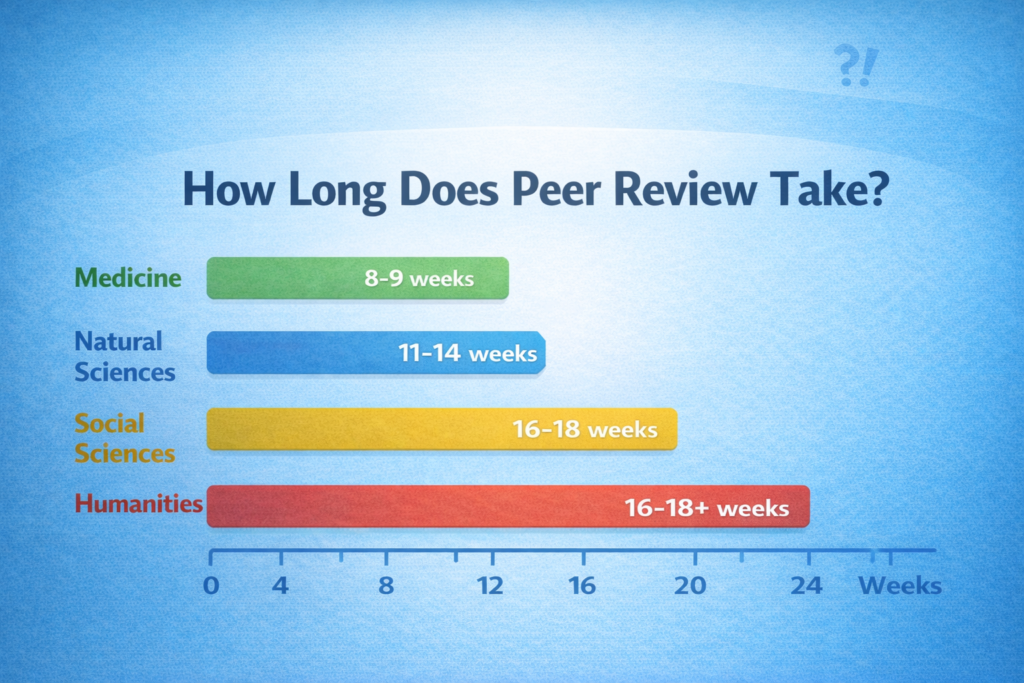
How quickly will I hear back after submitting?
Journal decision timelines vary widely by field and journal:
Initial editorial decision (desk review):
- Fast journals: 3-7 days
- Average journals: 1-3 weeks
- Slow journals: 4-6 weeks
Full peer review process:
- Fast journals: 4-8 weeks total
- Average journals: 2-4 months total
- Slow journals: 6-12+ months total
Your cover letter doesn’t influence timeline, but it does influence whether you advance past the initial desk review stage. A strong cover letter ensures faster advancement to peer review rather than sitting in the desk rejection pile.
If you haven’t heard anything after the journal’s stated timeline, it’s appropriate to send a polite status inquiry to the editorial office.
Should I mention co-authors in the cover letter?
Generally no. The manuscript itself lists all authors and their contributions. Mentioning co-authors in the cover letter is unnecessary unless:
Mention if:
- A co-author is an exceptionally prominent figure whose involvement strengthens credibility (Nobel laureate, field founder, etc.)
- The collaboration itself is noteworthy and relevant to the manuscript (e.g., unusual international partnership, interdisciplinary team)
- You’re clarifying the corresponding author responsibilities
Example: “This work represents a collaboration between the laboratories of Dr. Smith (a pioneer in CRISPR technology) and Dr. Jones (an expert in cancer biology), bringing together the multidisciplinary expertise needed to address this complex problem.”
Don’t mention:
- Standard academic collaborations
- That your co-authors are “also” experts in the field (this is expected)
- Detailed credentials for each co-author
What file format should I use for the cover letter?
Follow the journal’s specific instructions. Common requirements include:
Most common: Upload as a PDF during online submission Sometimes required: Paste into a text box during online submission Increasingly rare: Word document (.doc or .docx) upload Very rare: Traditional mail with signature
Pro tips:
- If uploading as PDF, ensure professional formatting and appearance
- If pasting into a text box, remove fancy formatting that won’t transfer
- Save your cover letter with a clear filename: “CoverLetter_[YourLastName][JournalAbbrev][Date].pdf”
- Keep a backup copy of every cover letter you submit
Should my cover letter match the voice/style of my manuscript?
Yes and no. Both should be professional and well-written, but they serve different purposes:
The manuscript:
- Formal, technical, discipline-specific language
- Detailed methods and results
- Comprehensive literature review
- Written for specialist peer reviewers
The cover letter:
- More accessible, less technical language
- High-level overview without excessive detail
- Focus on significance and novelty
- Written for editors (who may not be specialists in your subfield)
Your cover letter should be clear enough that an editor in your general field (but not your specific specialty) can understand why your work matters.
Final Checklist Before Submission
Before hitting “submit,” verify every item on this checklist:
Content Checklist
- [ ] Editor’s name is correct and current
- [ ] Journal name is correct throughout (no copy-paste errors from other submissions)
- [ ] Manuscript title matches exactly what’s in the submission
- [ ] Article type is correctly specified
- [ ] Research summary is 2-3 sentences and not copied from abstract
- [ ] Journal fit statement is specific and references actual aspects of the journal
- [ ] All required statements are included (originality, conflicts of interest, ethics, funding, data availability, etc.)
- [ ] Suggested reviewers (if required) have correct contact information
- [ ] Excluded reviewers (if any) have brief, professional justifications
- [ ] Contact information is complete and current
Quality Checklist
- [ ] No spelling or grammatical errors
- [ ] No acronyms unless defined, or better yet, no acronyms at all
- [ ] No jargon that a non-specialist couldn’t understand
- [ ] No hyperbolic language (“groundbreaking,” “revolutionary,” etc.)
- [ ] No negative comments about other researchers’ work
- [ ] No personal career information or sob stories
- [ ] Length is under 500 words (ideally 250-400)
- [ ] Fits on one page with standard formatting
Formatting Checklist
- [ ] Professional font (Times New Roman, Arial, Calibri) in 11-12 point
- [ ] Standard margins (1 inch all sides)
- [ ] Single spacing within paragraphs
- [ ] Paragraph breaks between sections for readability
- [ ] Proper business letter format with date, addresses, greeting, body, closing, signature
- [ ] Saved in correct format (usually PDF)
- [ ] Filename is professional and clear
Strategic Checklist
- [ ] Highlights what’s genuinely novel and significant about your work
- [ ] Emphasizes findings that will interest the journal’s specific readership
- [ ] Demonstrates you’ve actually read recent issues of the journal
- [ ] Makes a compelling case for why THIS journal (not just any journal)
- [ ] Strikes an appropriate balance between confidence and humility
- [ ] Includes at least one specific quantitative result
- [ ] Connects your work to broader significance or applications
Final Review
- [ ] Read the cover letter aloud to catch awkward phrasing
- [ ] Have at least one co-author review it
- [ ] Verified against the journal’s Instructions for Authors one final time
- [ ] Checked that you’re submitting to the right editorial section/category
- [ ] Confirmed no mention of previous rejections from other journals
- [ ] Saved a dated copy in your records
Key Takeaways: The 10 Commandments of Cover Letters
Let’s distill everything into essential principles you must remember:
1. Customize Ruthlessly
Every cover letter must be substantially customized for each journal. Generic letters are immediately recognizable and dramatically reduce your chances.
2. Lead with Impact
Your opening sentences should immediately convey what’s novel and significant about your work. Busy editors decide within 30 seconds whether to keep reading.
3. Demonstrate Journal Fit Specifically
Don’t just claim your work “fits”—prove it by referencing recent articles, editorial priorities, and the journal’s specific readership.
4. Be Concise
250-400 words is ideal. Never exceed one page. Respect the editor’s time, and they’ll respect your submission.
5. Avoid Jargon
Write for an editor in your general field, not just specialists in your narrow subfield. Clear communication signals quality science.
6. Include All Required Elements
Missing mandatory statements about originality, conflicts of interest, or ethical approval can trigger automatic rejection.
7. Quantify Your Impact
Specific numbers are more persuasive than vague claims. “40% improvement” beats “substantial improvement.”
8. Never Mention Previous Rejections
Each submission should appear to be your first choice for that journal. Past rejection history is irrelevant and creates negative bias.
9. Proofread Obsessively
Zero errors are acceptable. If you can’t write an error-free one-page letter, editors will question your manuscript quality.
10. Stay Professional and Humble
Confidence is good; arrogance is destructive. Make your case compellingly without hyperbole, demands, or entitlement.
Your Path Forward
Writing an effective journal submission cover letter is both an art and a science. While it may seem like a minor formality compared to your years of research, those 300-400 words can determine whether your manuscript advances to peer review or lands in the rejection pile.
The good news: with the templates, examples, and strategies in this guide, you now have everything you need to write cover letters that catch editors’ attention for the right reasons.
Your Next Steps
- Before writing: Thoroughly research your target journal using the strategies outlined above
- While writing: Use the appropriate template and customize it heavily for your specific manuscript and journal
- Before submitting: Work through the complete checklist to ensure nothing is missing
- After submitting: Track your manuscript through the journal decision process and be prepared to respond professionally to any outcome
Remember: manuscript rejection is a normal part of academic publishing. Even the best researchers face rejection regularly. What separates successful authors from struggling ones is their ability to:
- Target appropriate journals strategically
- Craft compelling cover letters that demonstrate fit
- Respond constructively to feedback
- Persist through multiple submission cycles when necessary
Your cover letter is your advocate when you can’t be in the room. Make it count.
About The Author
This guide was written by Dr. James Richardson, a research engineer who has experienced manuscript rejection from both sides—as an author receiving disappointing decisions and as a reviewer whose critical feedback has contributed to rejection decisions. The strategies reflect what actually works for transforming rejection into eventual publication success.
Good luck with your submission!
Looking for more help navigating the publication process? Explore our complete collection of guides on journal submission, peer review, and responding to editorial decisions.